2026 Best Impact Racks for Global Buyers?

Time:2026-10-25 Author:Oliver
0%

Choosing the right Impact Racks in 2026 requires more than comparing prices, load ratings, or glossy product photos. Global warehouses face heavier pallets, faster forklifts, narrow aisles, and increasingly automated operations. Small design weaknesses can become expensive failures.

The 2024 MHI Annual Industry Report found that 83% of respondents expect to increase supply-chain technology and innovation investments over the next five years. That shift matters. Impact Racks must now support safer material flow, sensor integration, and clearer inspection routines. They should also match local engineering requirements, seismic conditions, pallet dimensions, and warehouse traffic patterns. A rack suitable for Rotterdam may not suit Santiago or Singapore.

Warehouse specialist David J. Piasecki wrote, “A warehouse is a system, not a collection of separate activities.” His point applies directly here. Rack protection cannot be judged separately from forklifts, floor markings, operator training, and maintenance records. The Rack Manufacturers Institute recommends regular inspections and immediate attention to damaged components. Yet many buying guides understate this practical issue. Product labels do not prevent collisions.

This 2026 guide compares Impact Racks through a buyer’s lens: structural strength, impact resistance, installation quality, replacement access, corrosion protection, and total ownership cost. Some conclusions remain imperfect. Supplier data is not always measured consistently. “Best” depends on the site. A careful buyer should verify every load chart, certification, and warranty before ordering. The strongest rack is not always the safest choice. The best system is the one workers can use correctly every day.
2026 Best Impact Racks for Global Buyers?

What Impact Racks Are and How They Support Industrial Storage

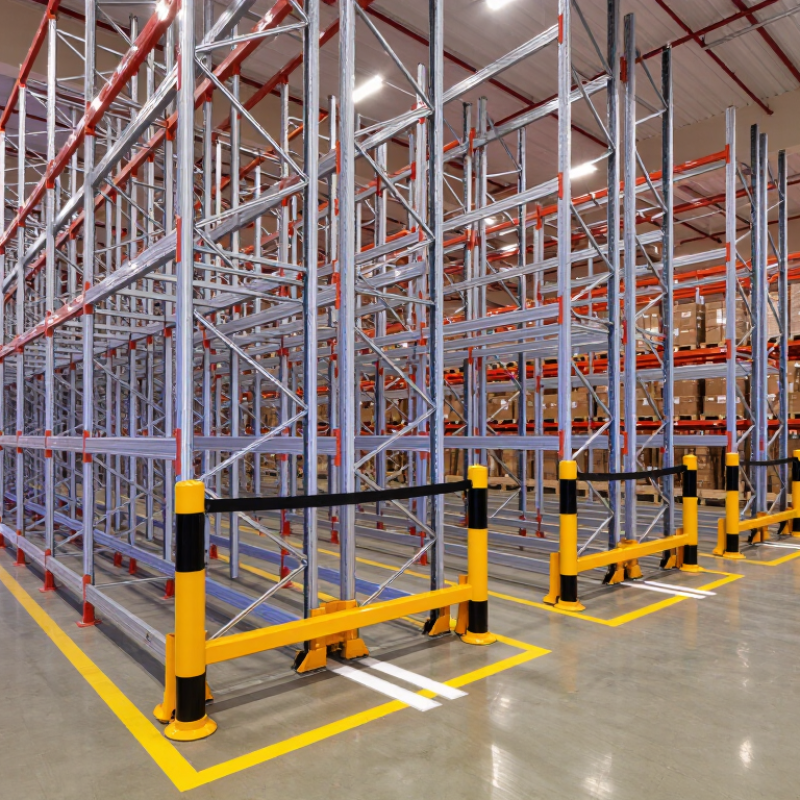
Impact racks are not a universally defined product category. In warehouse practice, the term usually describes pallet-rack systems designed to resist forklift strikes. These systems may include reinforced uprights, column guards, and replaceable barriers. Uprights carry vertical loads. Beams support pallets. Bracing controls movement. A damaged guard is easy to notice. A bent upright may not be. That difference makes inspection experience essential.

The safety case is substantial. The U.S. Occupational Safety and Health Administration’s Powered Industrial Trucks eTool reports about 85 annual forklift fatalities and 34,900 serious injuries. Rack design cannot prevent every collision. Clear aisles, protected corners, anchored frames, and controlled speeds can reduce exposure. OSHA 29 CFR 1910.176(b) requires stored materials to remain stable and secure against sliding or collapse. Load plaques should match real pallet weights, beam levels, and working clearances. Guesswork is costly.

Digital tools add another layer. MHI’s 2024 Annual Industry Report states that 14% of supply-chain organizations use artificial intelligence today, while 83% expect adoption within five years. This shift can support rack inspections through asset tags, photographs, and maintenance alerts. It cannot replace a trained check after impact. Global buyers should request tested load data, protection details, installation tolerances, and replacement procedures. The word “impact” sounds reassuring. It is not a safety certificate. Local engineering review still matters.

2026 Best Impact Racks for Global Buyers

What Impact Racks Are and How They Support Industrial Storage

Impact-resistant rack systems are selected around pallet dimensions, load handling, and the risk of forklift contact. The chart compares the floor area of widely used pallet footprints. Larger footprints require appropriate beam spacing, upright protection, and aisle planning. Actual rack capacity must be verified from the rack supplier’s engineering data, pallet weight, beam span, and local safety requirements.

Key Specifications to Compare When Choosing Impact Racks in 2026

Choosing impact racks in 2026 requires more than comparing prices. Start with rated load capacity per level, upright thickness, beam size, and the intended pallet weight. A rack holding 1,000 kilograms per level needs documented testing, not a confident sales claim. Check the safety factor, anchoring method, and floor requirements for your warehouse.

Warehouse experience shows that small details create expensive problems. Measure forklift aisle width, pallet overhang, ceiling clearance, and beam adjustment intervals. Consider corrosion-resistant finishes for humid ports or cold storage areas. Confirm seismic design where local conditions require it. Inspectors may also request material certificates, welding records, and installation instructions. These documents support reliable purchasing across different markets.

Tips: Request a complete specification sheet. Ask for independent test evidence. Verify dimensions with a loaded pallet. Never assume “heavy duty” means suitable. Compare replacement parts and delivery times, too. One overlooked protector can damage an upright quickly. I once underestimated clearance by only a few centimeters; the layout looked efficient, but daily forklift movement became awkward. That mistake changed my view: the best rack is not always the strongest one, but the one properly matched to the building, load, and operating habits.

Leading Impact Rack Types for Different Warehouse Applications

2026 Best Impact Racks for Global Buyers

Leading Impact Rack Types for Different Warehouse Applications

The best impact rack depends on traffic, load weight, and available floor space. There is no universal winner. In busy distribution centers, selective pallet racks offer direct access to every pallet. Upright guards, end barriers, and reinforced base plates help reduce damage from forklift contact. This layout suits mixed inventory and frequent picking.

Drive-in racks work well for cold storage and high-volume products with few stock-keeping units. They provide dense storage, but forklift movement requires careful control.

Push-back racks support better product rotation and deeper storage, although their moving carts need regular inspection.

For cartons and small packages, carton-flow racks improve picking speed through gravity-fed lanes. Cantilever racks are more suitable for long materials, pipes, timber, and irregular loads.

Tips: Measure aisle width with the actual forklift, not a catalog figure. Check beam capacity, upright thickness, anchoring, corrosion resistance, and local engineering requirements. Ask for load tests and inspection records. A rack may look heavy-duty but still fail under uneven loading or repeated impact. In one warehouse review, poor pallet placement caused more damage than equipment age. That detail is easy to miss. Leave clearance near corners, mark travel lanes clearly, and inspect damaged frames immediately. Supplier documentation should state tolerances, installation limits, and compatible safety accessories.

Global Safety, Quality, and Compliance Requirements

2026 Best Impact Racks for Global Buyers?

Global buyers should judge impact racks by safety, quality, and documented compliance—not appearance alone. A strong rack uses certified steel, consistent welds, protected edges, and clearly marked load limits. Every beam, upright, and guard should match the supplier’s tested configuration. Warehouse inspections often reveal simple failures: loose anchors, overloaded levels, or damaged frames left in service. Small defects become serious risks.

Compliance also depends on location and use. Buyers should request material certificates, load-test reports, installation instructions, and inspection records. These documents support reviews under applicable national and regional safety standards. Fire protection, seismic exposure, forklift traffic, and temperature changes may alter the correct specification. A product accepted in one market may need additional assessment elsewhere. No rack is perfect, and supplier claims still require independent verification.

Tips: Measure aisle width and impact zones before ordering. Ask for replacement-part availability and maintenance guidance. Confirm that installers are trained for the rack system. Photograph every damaged upright during routine checks. Do not rely only on a catalogue rating. Have a qualified engineer review unusual loads, cold storage conditions, or high seismic risk. This extra review may feel slow, but it can prevent costly assumptions.

How to Select Reliable Impact Rack Suppliers Worldwide

How to Select Reliable Impact Rack Suppliers Worldwide

Reliable impact racks begin with supplier evidence, not attractive catalog photos. MHI’s 2024 Annual Industry Report found that 55% of supply chain leaders planned higher technology investment. That pressure can encourage rushed warehouse upgrades. Ask suppliers for load calculations, steel grades, weld procedures, and independent test records. Request drawings showing upright protection, anchor spacing, and forklift clearance. Small details matter. A damaged corner often starts with poor impact planning.

Compare suppliers against recognized safety frameworks, including ANSI/RMI standards and FEM racking guidance. OSHA 29 CFR 1910.176 also requires stored materials to remain stable and secure. For international projects, confirm whether the supplier can provide local compliance documents and installation instructions. Check their inspection process, replacement-part availability, and response time after delivery. A dependable supplier should explain failure limits clearly, not promise “unbreakable” protection.

Practical experience reveals another test: ask for references from warehouses with similar loads, climates, and forklift traffic. Review photographs of installed guards, not only factory samples. Measure aisle width on site. I once saw a specification overlook battery-charging traffic near a rack end. The rack was strong, but the layout was wrong. That mistake remains worth remembering. Price still matters, yet low bids can hide thinner steel, weaker anchors, or limited after-sales support. A written warranty, traceable material records, and documented installation training provide stronger confidence than marketing language.

FAQS

What are impact-resistant pallet racks?

They are pallet-rack systems designed to reduce damage from forklift strikes. Reinforced uprights, column guards, and replaceable barriers may be included. The term has no universal definition.

Which rack parts carry the main load?

Uprights carry vertical loads. Beams support pallets. Bracing controls movement. A bent upright may hide serious weakness.

Can impact-resistant racks prevent every collision?

No system can stop every accident. Clear aisles, protected corners, anchored frames, and controlled speeds reduce exposure. The rack is only one safety layer.

How should warehouse teams inspect damaged racks?

Check guards, uprights, beams, anchors, and braces after any strike. Look for bends, cracks, loose connections, and shifted frames. Photos and asset tags help track changes.

What documents should buyers request from suppliers?

Request load calculations, steel grades, weld procedures, drawings, and independent test records. Confirm anchor spacing and forklift clearance. Avoid vague claims such as “unbreakable.”

How can buyers compare suppliers fairly?

Compare protection details, inspection procedures, replacement parts, response times, and installation training. Review projects with similar loads and forklift traffic. Catalog photos are not enough.

Why do warehouse layouts matter?

A strong rack can still fail as a storage solution if traffic routes are poorly planned. Measure aisle width and rack-end clearance onsite. Battery-charging traffic needs special attention.

Should digital tools replace trained inspections?

No. Digital alerts, photographs, and asset tags support maintenance records. A trained person must inspect damage after impact. Technology helps, but it can miss context.

What should international buyers verify before installation?

Confirm local engineering review, compliance documents, installation tolerances, and replacement procedures. Match load plaques with actual pallet weights and beam levels. Guesswork is risky.

Is the lowest quotation usually the best choice?

Not always. A low price may reflect thinner steel, weaker anchors, or limited support. Written warranties and traceable material records offer stronger confidence. I would still check the small details.

Conclusion

Impact Racks are essential industrial storage systems designed to protect warehouse structures, inventory, and handling equipment in areas exposed to vehicle movement, loading activity, and heavy operational traffic. This guide explains how they support safer, more organized storage while improving workflow efficiency. It also outlines the key specifications global buyers should compare in 2026, including load capacity, dimensions, material strength, impact absorption, installation requirements, visibility, maintenance needs, and compatibility with existing warehouse layouts.

The article reviews leading Impact Racks types for applications such as pallet storage, aisle protection, column guarding, dock areas, and high-traffic zones. It also highlights the importance of safety testing, quality control, clear technical documentation, and compliance with applicable regional and international requirements. Finally, readers will learn how to evaluate reliable suppliers worldwide by reviewing manufacturing capabilities, product consistency, customization options, delivery support, installation guidance, after-sales service, and transparent communication. This practical overview helps warehouse operators make informed decisions that balance protection, durability, operational efficiency, and long-term value.

Oliver

Oliver

Oliver is a seasoned marketing professional with a wealth of expertise in driving brand awareness and engagement. With a deep understanding of our company's product offerings, he consistently delivers high-quality content that enriches our professional blog. His insights not only shed light on......