Who Are the Top Wire Shelving Manufacturers in China?

Time:2026-11-01 Author:Sienna
0%

China’s wire shelving market serves warehouses, retailers, restaurants, healthcare facilities, and homes. Yet choosing a manufacturer is not just a price comparison. A shelf that looks sturdy in a catalog may wobble under uneven loads, rust in a damp storeroom, or waste picking space when dimensions do not match the goods.

Demand for organized storage is part of a broader logistics shift. The U.S. Census Bureau reported that U.S. e-commerce sales reached $1.19 trillion in 2024, or 16.1% of total retail sales. That figure is not a measure of wire shelving sales, but it illustrates the scale of goods moving through storage and fulfillment systems. MHI’s 2024 Annual Industry Report also describes ongoing investment in supply-chain capabilities, including automation and visibility. For buyers, the practical questions remain tangible: wire gauge, coating quality, load ratings, wheel design, packaging, and replacement-part support.

This guide compares leading Chinese manufacturers through those details, rather than relying on broad claims. It considers product range, customization, quality controls, export experience, and communication during sampling. Small differences matter. A few millimeters can affect fit; a rough weld can catch a cleaning cloth. No source material was supplied for a verifiable quotation from a named Wire Shelving industry expert, so I will not invent one. That limitation matters. Manufacturer rankings should be checked against current factory records, product specifications, and buyer references before a purchase decision.
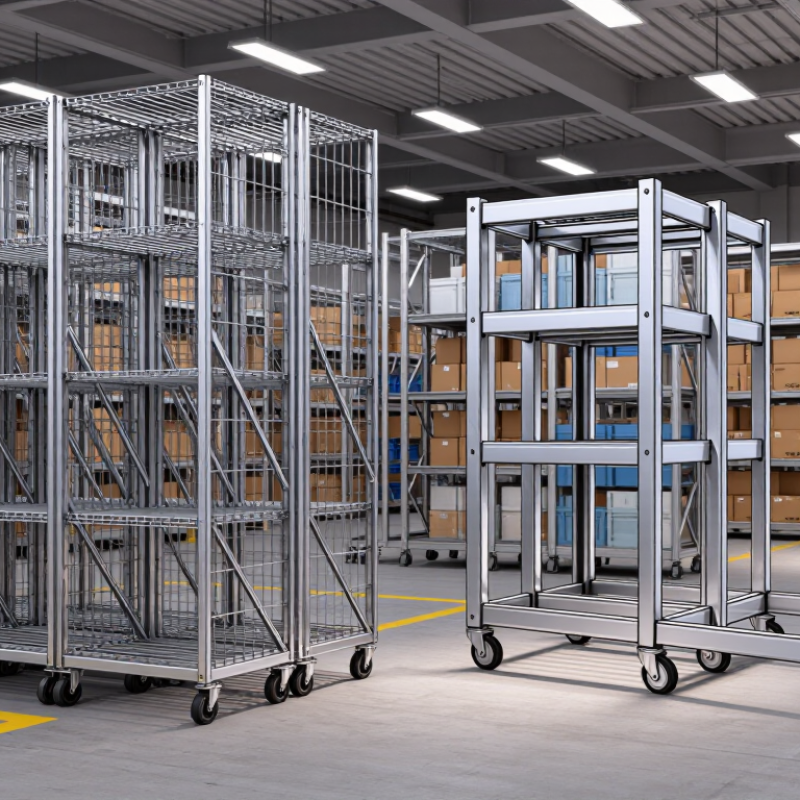
Who Are the Top Wire Shelving Manufacturers in China?

What Wire Shelving Is and How It Is Classified

Wire shelving is a storage system made from metal wires arranged into open shelves, usually supported by upright posts. Its open grid lets air circulate and makes dust or spills easier to spot. In practical use, shelf spacing, wire thickness, and frame stability matter as much as appearance. A loaded shelf should sit level; even a small wobble can become irritating over time.

Wire shelving can be classified by material and surface finish, structure, and intended use. Stainless steel models are often selected for humid or wash-down areas, while coated steel shelves suit many general storage settings. Finishes vary, so check how the coating is applied and whether it matches the environment. Structurally, units may be stationary, mobile on casters, or designed for wall mounting. They also differ in shelf capacity and adjustability. These categories overlap. A mobile unit, for example, may also have adjustable shelves, so the label alone tells only part of the story.

Tips: Measure the items and available space before choosing a unit. Check the rated load for each shelf, not just the whole frame. Look closely at the connectors and caster locks; these small details affect everyday stability. Specifications are useful, but they do not replace careful assembly. A detail is easy to miss.

How China’s Wire Shelving Industry Is Organized

China’s wire-shelving industry is organized as a supply chain, not a single factory district. Upstream suppliers draw steel wire, cut tubing, and apply protective finishes. Component makers produce clips, posts, and shelf grids. Fabricators weld and assemble these parts, then pack finished racks for domestic or export orders. Some firms handle several stages; others specialize. That distinction matters.

The World Steel Association’s World Steel in Figures 2024 reports that China produced 1,019.1 million tonnes of crude steel in 2023, about 54% of global output. This indicates deep material capacity, but it is not a wire-shelving production figure. The World Bank’s Logistics Performance Index 2023 ranked China 19th, offering broader context on transport and supply-chain capability. It does not measure shelving shipments. For buyers, the practical questions are narrower: Can a supplier show wire diameter, coating thickness, weld consistency, and load-test records? A neat sample may hide uneven welds or thin coatings. I would ask for repeat-batch inspection results, too; a single test can be misleading.

How to Assess Leading Chinese Manufacturers

Assess Chinese wire-shelving manufacturers through verifiable factory evidence, not catalog claims. Request drawings, material specifications, and load-test reports for the exact shelf design you plan to buy. Check whether the stated capacity applies per shelf or to the whole unit. Ask how samples are tested, and whether results cover the finished product. Inspect welds, cut edges, and coating around joints; these small areas can reveal uneven production. Request batch records and a clear process for handling defects. A polished sample can still hide inconsistent mass production.

Digital traceability deserves attention. MHI’s 2024 Annual Industry Report found that 55% of surveyed supply-chain professionals planned to increase technology investment. The survey covers supply chains broadly, not shelving factories specifically, so treat it as context, not proof of supplier quality. Ask manufacturers to show how they connect inspection records to production batches. Then verify the claim with a recent order record or factory audit. I would also compare quoted capacity with independent test results; this step is easy to skip when deadlines press. It is not perfect. Coating tests, including salt-spray results, help compare samples, but do not fully predict years of warehouse wear. Request the test method, duration, and acceptance criteria before comparing figures.

Profiles of Notable Wire Shelving Manufacturers in China

China’s wire shelving sector includes manufacturers with different strengths, rather than one clear type of supplier. Some focus on high-volume production for warehouses and retail stockrooms. Their lines may include chrome-plated shelves, posts, and adjustable leveling feet. Ask how they check welds and coating thickness. Details matter.

Other manufacturers specialize in custom dimensions or finishes. They may adapt shelf spacing, corner guards, or caster options for kitchens, clinics, and back rooms. A useful supplier can explain how a design handles damp conditions and repeated cleaning. Request a sample and inspect the joints yourself. It takes time.

A third group serves export buyers through engineering support and coordinated packaging. Look for clear drawings, stated load-test methods, and packaging that protects corners during transit. These points are more useful than a broad claim of “premium quality.” Production capacity alone does not prove consistency. I would still verify a sample batch against the final specification; paperwork can look complete while small details vary. Compare responses, not just prices, and confirm which measurements apply to each shelf level.

How Manufacturers Differ in Products and Production Capabilities

Wire shelving manufacturers in China can make similar-looking products, but their capabilities often differ at the details. One may focus on light-duty pantry racks, while another handles heavier warehouse shelving with thicker wire and reinforced corners. Shelf dimensions, post design, and adjustable clips affect stability and usable space. Small differences matter.

Production equipment shapes what a factory can deliver consistently. Automated welding can help keep joints uniform across large orders; manual finishing may suit custom runs but needs close inspection. Powder-coated, chrome-plated, and stainless-steel options serve different environments. Ask how the finish is applied and checked, especially around welds, where uneven coverage can appear. Capacity is not just a number. It also depends on tooling, changeover time, and whether samples match the final batch.

Quality evidence deserves attention. Request drawings, material specifications, and load-test results for the exact shelf configuration, not a similar model. Check whether the stated load applies per shelf and under what conditions. A polished sample can hide production variation. It happens. Factory audits and sample checks offer useful evidence, though neither guarantees every shipment will be identical. Buyers should compare the actual product, inspection process, and order requirements—not just a catalogue image.

FAQS

How is China’s wire-shelving industry organized?

It works as a supply chain. Some suppliers prepare steel wire, tubing, or protective finishes. Others make clips, posts, and shelf grids, then weld and pack finished racks.

Does China’s large steel output prove strong shelving production?

No. China produced about 54% of global crude steel in 2023, but that figure does not measure wire shelving. It shows material capacity, not a factory’s output.

What documents should I request from a manufacturer?

Ask for drawings, material specifications, and load-test reports for your exact shelf design. Check whether capacity applies to each shelf or the whole rack. Details matter.

How can I check whether a sample reflects mass production?

Inspect welds, cut edges, and coating around joints. Request repeat-batch inspection results and defect-handling records. One polished sample may not tell the whole story.

What should a load-test report include?

It should identify the tested design and explain how the sample was tested. Compare the stated capacity with independent test results. I might be overlooking something, but vague reports deserve follow-up.

How can I verify production traceability?

Ask how inspection records connect to specific production batches. Check the explanation against a recent order record or factory audit. Context, not proof.

Do coating tests predict years of warehouse use?

Not fully. Salt-spray results can help compare samples, but they cannot predict every condition in a warehouse. Request the test method, duration, and acceptance criteria.

What should I look for during a factory assessment?

Compare the quoted capacity with test results, then review batch records and visible weld quality. A tidy sample can still hide thin coating or uneven production. Not perfect.

Conclusion

This article explains what Wire Shelving is and how it is classified by structure, materials, finishes, and intended use. It also outlines how China’s wire shelving industry is organized, from manufacturing and surface treatment to customization and distribution. Readers will find practical ways to assess manufacturers, including their production capacity, quality-control processes, product range, customization options, and ability to meet different project requirements.

The article also presents profiles of notable types of Chinese manufacturers without focusing on brand names, highlighting how their strengths and capabilities can vary. By comparing product designs, production methods, and service offerings, buyers can better understand which supplier characteristics align with their needs. The goal is to provide a clear framework for evaluating the market and making informed sourcing decisions.

Sienna

Sienna

Sienna is a skilled marketing professional with a deep expertise in our company’s core products and services. With a passion for innovation and detail, she plays a pivotal role in crafting insightful blog posts that not only highlight the unique features of our offerings but also provide valuable......