Warehouse efficiency often depends less on total floor area than on how smoothly pallets enter, remain, and leave storage positions. Drive-in Storage uses deep lanes and shared entry points, allowing forklifts to place pallets several positions deep. This design can increase cube utilization, especially for warehouses handling large quantities of similar products. Space matters. So does movement.
In practical warehouse planning, this system suits stable inventory with limited stock-keeping units and predictable rotation. A forklift can travel inside the lane, reducing the number of aisles and recovering valuable floor space. It may work well for seasonal goods, beverage pallets, packaged materials, and other products stored in batches. However, Drive-in Storage generally follows a last-in, first-out pattern. That limitation can affect products requiring strict first-in, first-out control or frequent order picking. It is not a universal answer.
A reliable decision requires more than comparing rack prices. Warehouse teams should examine pallet dimensions, load weights, forklift clearance, turnover rates, and emergency access. Operators also need clear training and regular inspections. A poorly planned lane can create congestion, product damage, or unnecessary handling delays. Small details matter. In one facility, even uneven pallet placement reduced usable depth and slowed retrieval. This example shows why layout calculations should be tested against real operating conditions. Drive-in Storage can improve efficiency, but only when its strengths match the inventory profile, equipment, and daily workflow. The choice deserves careful review, not automatic approval.
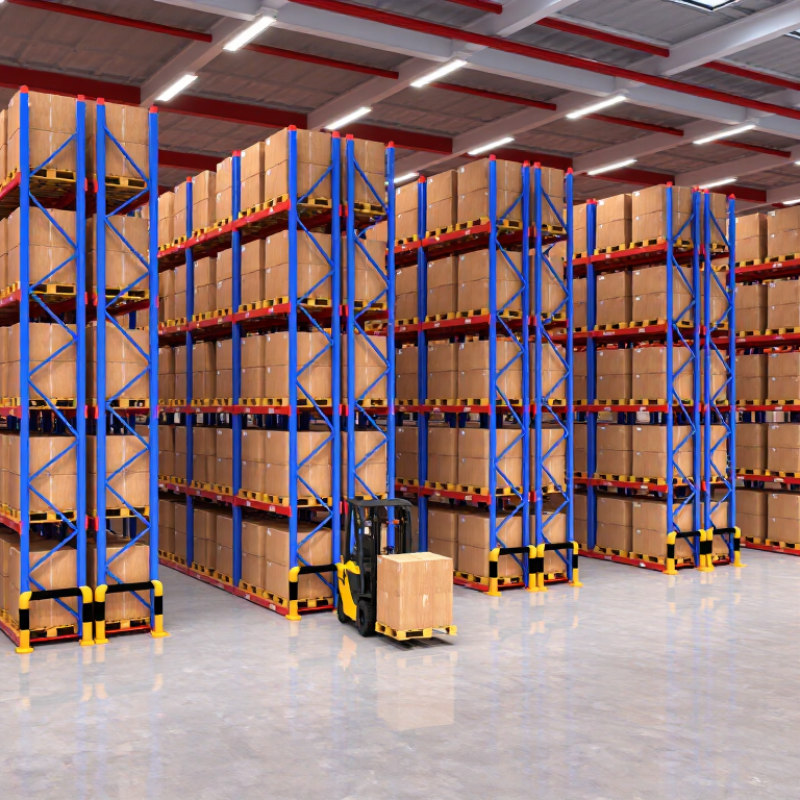
Drive-in storage is a high-density pallet system designed to reduce unused aisle space. Forklifts enter the rack structure and place pallets on supported rails. There are no separate access aisles for every pallet position. That changes the layout.
The system usually works on a last-in, first-out basis. A forklift loads pallets from the front, moving deeper into the lane as inventory builds. During retrieval, the nearest pallet leaves first. Drive-through designs can support first-in, first-out movement because forklifts access both ends. This method suits uniform pallets, limited stock-keeping units, and products with longer storage cycles. Operators must check rail condition, pallet quality, load ratings, and forklift clearance every shift. Small damage can become a serious risk inside a deep lane.
The density advantage is practical, but it is not automatically warehouse efficiency. The 2024 MHI Annual Industry Report found that 55% of supply chain professionals expected to adopt robotics and automation within the next three to five years. That pressure makes every square metre more valuable, yet dense racking can slow picking when product variety increases. I would not choose drive-in storage only because it holds more pallets. A warehouse trial should measure travel distance, loading time, retrieval errors, and damaged pallets. The neat theory can fail. This is where experienced operators matter.
Operational comparison of drive-in pallet storage and conventional selective pallet racking
| Efficiency Dimension | Drive-In Storage | Selective Pallet Racking | Operational Implication |
|---|---|---|---|
| Storage Principle | Forklifts enter storage lanes and place pallets on supported rails. The system uses a compact, high-density layout. | Forklifts access each pallet position directly from an aisle. | Drive-in storage reduces aisle space, while selective racking prioritizes direct access. |
| Pallet Access | Usually operates on a last-in, first-out (LIFO) basis because pallets are loaded and retrieved from the same side. | Normally supports direct access to individual pallets and is well suited to first-in, first-out (FIFO) workflows. | Drive-in storage is most effective when each lane contains the same product or batch. |
| Typical Storage Density | High density; it can commonly provide approximately 60% to 75% more usable pallet capacity than selective racking in a comparable footprint, depending on layout and lane depth. | Moderate density because wider aisles and individual pallet access positions are required. | High density can reduce the warehouse footprint required for reserve inventory. |
| Aisle Requirement | Fewer aisles are needed because the forklift travels inside the rack structure. | More aisle area is required to provide front access to every pallet location. | Reduced aisle area can increase floor utilization, but it also requires disciplined traffic planning. |
| Lane Depth | Common installations use multiple pallet positions in depth; the practical depth depends on product turnover, forklift specifications, building height, and safety requirements. | Usually one pallet position deep per rack face, with some specialized configurations using greater depth. | Deeper lanes improve density but can reduce selectivity and make inventory rotation more important. |
| Best Inventory Profile | Large quantities of a limited number of stock-keeping units, including relatively uniform or seasonal goods. | Many stock-keeping units with frequent picking and a need for individual pallet access. | Choosing the system according to SKU variety and demand frequency helps prevent wasted capacity. |
| Product Rotation | LIFO is generally preferred. FIFO can be achieved with drive-through or two-sided configurations when the layout supports it. | FIFO is easier to manage because pallets can be accessed independently from the aisle. | Perishable products may require a two-sided design, strict batch control, or another storage method. |
| Forklift Operation | Requires operators to enter and exit rack lanes safely while aligning the load with elevated rails. | Forklift travel is primarily along warehouse aisles, with pallet placement from the aisle side. | Drive-in layouts can improve capacity but require operator training, clear lane rules, and controlled speeds. |
| Loading and Unloading Sequence | Pallets are generally loaded from the deepest available position outward and retrieved from the front according to the selected lane sequence. | Pallets can be placed into or removed from individual locations without moving other pallets in the same rack row. | Drive-in systems require planned loading sequences to avoid unnecessary pallet handling. |
| Space Utilization | Very strong for reserve storage because both aisle space and vertical space can be used efficiently. | Good accessibility, but a larger proportion of the floor area is normally allocated to aisles. | Drive-in storage can be particularly valuable where warehouse expansion space is limited. |
| Selectivity | Lower selectivity because accessing a rear pallet may require handling pallets positioned closer to the aisle. | High selectivity because each pallet location is independently accessible. | High-density storage should be balanced against picking frequency and order complexity. |
| Installation Considerations | Requires rack uprights, rails, entry guides, impact protection, suitable floor conditions, and adequate clearance for the selected forklift. | Requires rack frames, beams, aisle clearances, floor anchoring, and protection at exposed rack locations. | Professional layout design is important for structural stability, safe clearances, and compliance with local regulations. |
| Maintenance Focus | Regularly inspect rails, uprights, bracing, guide components, floor conditions, and impact damage caused by forklift entry. | Regularly inspect frames, beams, connectors, anchors, guards, and signs of impact or overloading. | Planned inspections help preserve load capacity and reduce the risk of operational interruptions. |
| Suitable Warehouse Applications | Cold storage, beverage storage, bulk reserve inventory, seasonal goods, and products stored in full-pallet quantities. | Order picking, mixed-SKU warehouses, distribution centers, retail replenishment, and operations requiring frequent pallet access. | The most efficient choice depends on throughput, SKU count, turnover rate, building dimensions, and inventory policy. |
| Primary Advantage | Maximum pallet capacity within a constrained footprint, especially for homogeneous inventory. | Maximum accessibility and flexibility for diverse inventory. | Drive-in storage improves density; selective racking improves accessibility. A hybrid layout may provide the best overall balance. |
Note: Capacity and utilization figures are typical planning ranges rather than guaranteed results. Actual performance varies with pallet dimensions, load weights, rack height, lane depth, forklift type, aisle width, building clear height, fire-protection requirements, and inventory turnover.
Drive-in storage is a high-density pallet system with rails inside deep rack lanes. Forklifts enter the structure to place pallets.
Forklifts load pallets from the front and move deeper into each lane. Retrieval usually follows a last-in, first-out pattern.
Yes, drive-through designs allow forklift access from both ends. This arrangement can support first-in, first-out movement.
It suits uniform pallets, limited product types, and full-pallet handling. Packaged food, paper goods, bottled drinks, and seasonal products may fit well.
Products needing strict rotation may create problems. Fresh produce, medicines, and mixed pallets often need easier individual access.
It reduces separate aisles and increases usable floor density. This can help cold-storage facilities save refrigerated space.
Older pallets can remain buried behind newer pallets. Mixed inventory may slow retrieval and increase searching time.
Operators should inspect rails, pallets, load ratings, and forklift clearance every shift. Small damage matters.
Measure travel distance, loading time, retrieval errors, lane occupancy, and damaged pallets. A trial may prove the theory wrong.
No. Dense storage can reduce aisle space but slow picking when product variety increases. That trade-off matters.
Drive-in Storage is a high-density warehouse solution that allows forklifts to enter rack lanes and place or retrieve pallets from supported storage positions. By reducing the need for multiple aisles, this system uses more of the available floor and vertical space, making it suitable for facilities that need to store large quantities of similar products. It works especially well for stable, non-perishable goods handled in uniform pallet loads and organized according to a last-in, first-out flow.
The main advantages of Drive-in Storage include excellent space utilization, reduced construction costs for additional storage areas, and efficient bulk handling. However, limited selectivity, slower access to individual pallets, and the need for careful forklift operation may make it unsuitable for high-variety inventory or first-in, first-out requirements. Choosing the right rack depth, load capacity, layout, and safety features is essential. Regular inspections, clear operating procedures, inventory planning, and disciplined loading practices can help maintain efficiency and prolong system service life.

 JGY Shelf