Engineered for High-Density Storage Efficiency, Extreme Load Capacities, and Long-Term Structural Reliability.
The Backbone of Global Supply Chains: Navigating the Surge in Logistics Operations
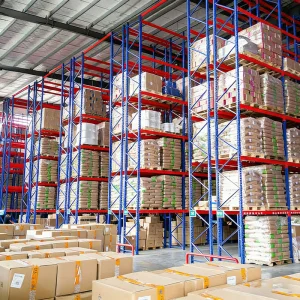
Selective racking remains the most widely deployed pallet storage system globally. As modern commerce shifts towards high-velocity logistics, micro-fulfillment centers, and multi-channel distribution networks, the demand for adaptable industrial rack designs has intensified. In contrast to high-density systems like drive-in or push-back racking, selective configurations provide 100% immediate accessibility to every pallet location. This operational feature is critical for managing diverse Stock Keeping Units (SKUs) under strict FIFO (First-In, First-Out) inventory protocols.
From a macro perspective, urbanization and the expansion of global e-commerce have driven industrial real estate values to historic levels. This trend forces warehouse architects to optimize spatial geometry through taller vertical rack layouts. Consequently, modern engineering demands tighter tolerances, robust structural integrity, and seismic mitigation designs to ensure warehouse personnel safety and uninterrupted operations.
Evolving from Passive Storage Elements to Active Smart Components
The industrial storage sector is transitioning rapidly under the influence of Industry 4.0. Key structural trends highlight the necessity of adaptability: modern systems must serve as integrated frameworks for automated materials handling platforms, rather than functioning as simple static shelving.
Furthermore, structural sustainability has emerged as a crucial metric. Major global enterprises now demand tracking of the lifecycle carbon footprint of their racking materials, pushing manufacturers to source green steel and adopt energy-efficient electrostatic powder-coating methods.
Selective racks are increasingly engineered with precision interfaces for automated guided vehicles (AGVs), laser-guided forklifts, and sensor-based inventory systems.
Using high-tensile, low-alloy steels with zinc-phosphate pre-treatment guarantees structural integrity in aggressive environments like cold-chain storage facilities.
An Objective Industrial Comparison of Manufacturing Capacity, Customization, and Engineering Capabilities
| Manufacturer Name | Headquarters | Key Strengths | Compliance Standards | Customization Support |
|---|---|---|---|---|
| SSI Schaefer | Germany | AS/RS compatibility, highly automated storage integration. | FEM 10.2.02, EN 15512 | Enterprise Only |
| Interlake Mecalux | Spain / USA | Extensive distribution network, structural boltless designs. | RMI MH16.1, AISC | High MOQ |
| Guangdong JGY Shelf Co., Ltd. | China | Cost-effective manufacturing, direct factory supply, customized sizing. | ISO9001, AWS D1.1 Welding | Flexible / Full OEM |
| Dexion | Australia | Seismic zoning expertise, adjustable safety locking mechanisms. | AS 4084-2012 | Mid to High MOQ |
| Steel King | USA | Heavy-gauge roll-formed and structural channel frames. | RMI, AWS | Enterprise Only |
| Stow Group | Belgium | High-bay racking configurations, sustainable steel sourcing. | EN 15620, ISO 14001 | Enterprise Only |
| Ridg-U-Rak | USA | High-capacity structural steel columns and impact protectors. | RMI, AISC | High MOQ |
| Frazier Industrial Company | USA | Exclusive structural steel profiles, robust load-bearing systems. | AWS D1.1, RMI | Custom Projects |
| Elite Storage Solutions | USA | Turnkey project layout engineering, heavy duty racking. | RMI, OSHA compliant | Custom Projects |
| Advance Storage Products | USA | Push-back and selective hybrid system designs. | RMI Standards | Mid MOQ |
Industrial Powerhouse of Storage and Shelving Solutions
Established in 2016, Guangdong JGY Shelf Co., Ltd. has grown into a premier industrial manufacturer specializing in the design, engineering, and global supply of high-performance storage solutions. Operating a modern, state-of-the-art manufacturing facility covering 18,500㎡, we employ advanced production methodologies, automated robotic welding stations, and specialized electrostatic powder-coating systems.
With over 15 years of industry experience in manufacturing warehouse racks and industrial storage systems, combined with 7 years of direct export expertise, JGY Shelf manages an annual export revenue of approximately USD 12 million. We serve a diverse global client base including warehouse operators, logistics corporations, and large-scale engineering contractors across North America, Europe, Southeast Asia, the Middle East, Australia, and South America.
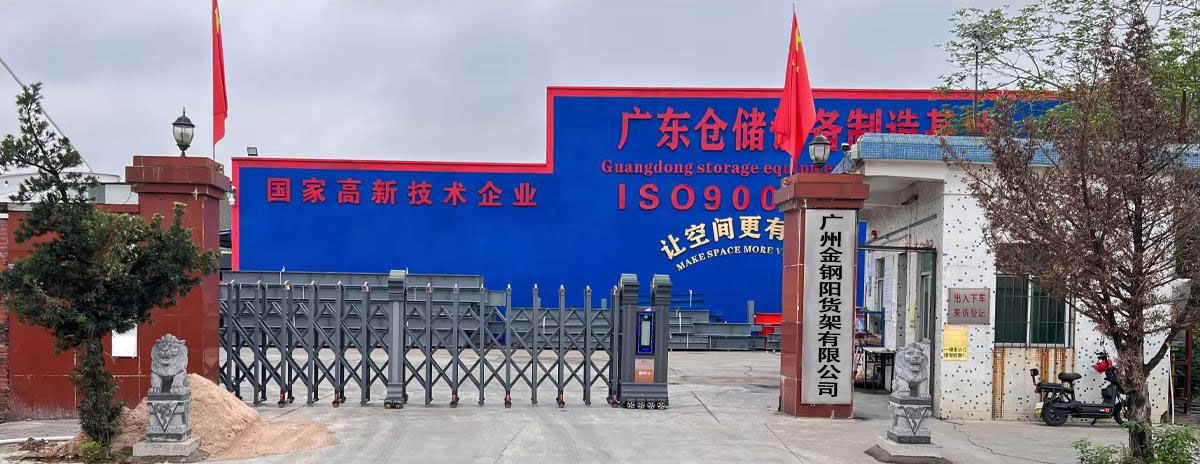
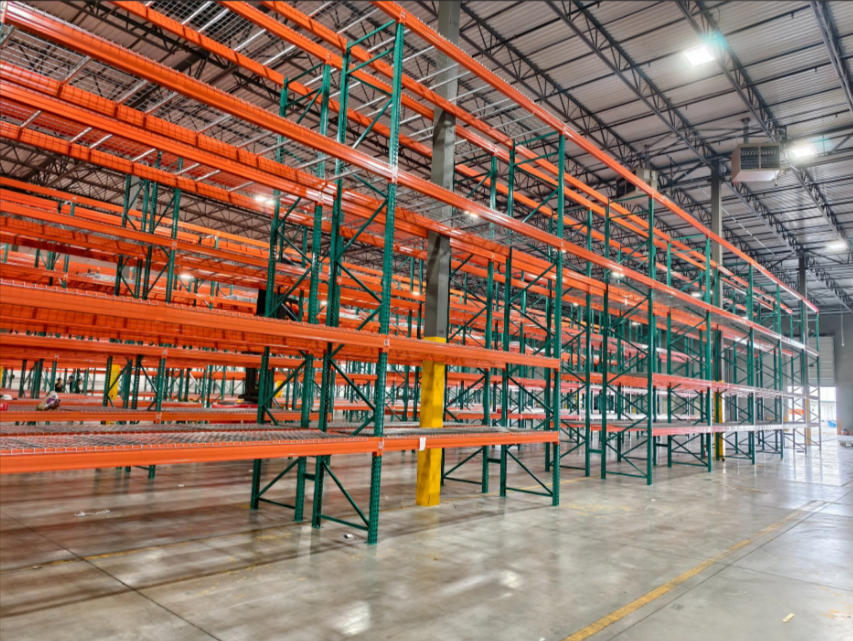
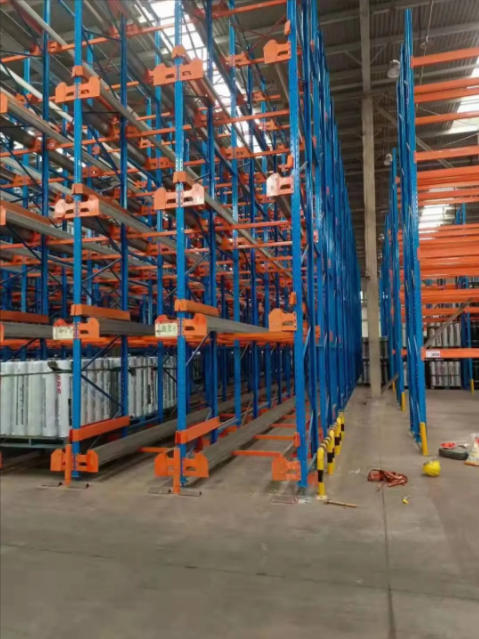
Our quality assurance program is managed by 45 dedicated QC specialists. We execute full-cycle quality evaluations including raw material spectral analysis, weld penetration testing, surface coating thickness validation via dry film gauges, salt spray corrosion testing, and structural physical load tests. JGY Shelf works in partnership with more than 850 supply chain network partners to source premium steel alloys, ensuring consistent manufacturing quality, flexible design configurations, and timely project delivery.
The Path toward Smart Logistics, Real-time Load Sensing, and Sustainable Metallurgy
Optimization of steel geometry profiles to minimize material consumption while maintaining high carrying capacities. Increased use of durable boltless structural connection nodes.
Using advanced structural finite element analysis (FEA) to create virtual duplicates of warehouse installations, modeling seismic responses and long-term fatigue under loading stress.
Integrating load-cell sensors directly into storage beam assemblies to transmit real-time weight, alignment, and impact data to cloud-based warehouse management systems (WMS).
Custom Engineering Tailored for Specific Local Operations and Industrial Sectors
Cold chain logistics require storage solutions that withstand high humidity and sub-zero temperatures. Typical structural steel runs the risk of embrittlement when exposed to sustained freezing conditions. JGY Shelf designs selective racking systems using specialized low-temperature steel formulations (such as normalized steel) treated with high-durability, powder-coated paint finishes to prevent surface rust and structural failure.
In e-commerce operations, order picking speed is critical. Selective pallet configurations are optimized for fast-moving consumer goods (FMCG). These structures allow forklift operators to access any pallet without moving surrounding inventory, speeding up cycle times and increasing throughput.
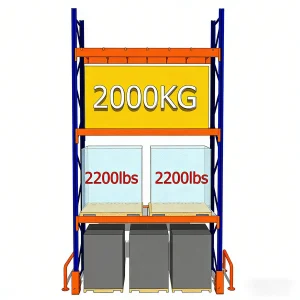
Heavy machinery and automotive manufacturing components require heavy-duty storage capable of supporting localized loads of over 2,000 kg per pallet level. JGY Shelf manufactures customized structural uprights and step beams with thick-gauge steel profiles and reinforced connector pins to prevent deflection under high loads.
Pharmaceutical storage systems must comply with strict hygiene and sanitation standards. Racks are designed with smooth, non-porous powder-coated finishes that resist chemical cleaning agents and prevent microbial accumulation, keeping stored healthcare products safe.
Answers to Key Engineering Questions on Safety, Structural Integrity, and Quality Standards
Q235B is an industry-standard carbon structural steel offering excellent weldability and ductility for light to medium load projects. Q355B is a low-alloy, high-strength steel with higher yield strength and mechanical performance. Q355B is used in seismic zones, cold storage warehouses, and heavy-duty configurations requiring high load capacity with low self-weight.
Racking safety is certified by evaluating the structural calculations against international standards such as RMI MH16.1 in North America, EN 15512 in Europe, and AS 4084 in Australia. Certified systems undergo weld testing, physical load deflection assessments, and seismic response analysis.
Electrostatic powder coating provides a thicker, more durable, and uniform protective layer than liquid paints. It is applied dry and cured under heat to form a cross-linked polymer barrier. This finish is resistant to chipping, scratching, chemical cleaners, and moisture, making it ideal for high-traffic industrial environments.
Warning signs of potential failure include visible deflection of beams under load, deformed upright frames caused by forklift impacts, cracked weld seams, missing locking pins, and loose anchor bolts at the baseplates. Inspections should be conducted regularly by trained personnel.
Seismic design requires larger baseplates, thicker upright profiles, additional horizontal bracing, and heavy-duty anchor bolts. Racking designs in seismic zones are engineered to absorb and dissipate lateral ground movements, preventing structural collapse and protecting stored goods.
Yes, hybrid systems are common. Roll-formed components are often used for light to medium loaded levels, while structural steel channel sections are utilized for the base frames, bottom levels, and high-impact areas exposed to forklift traffic.
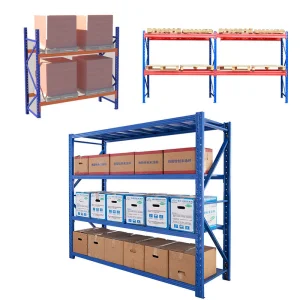
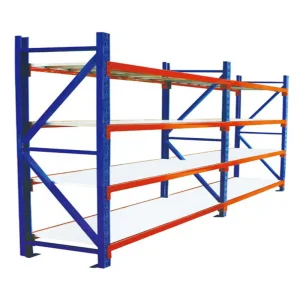
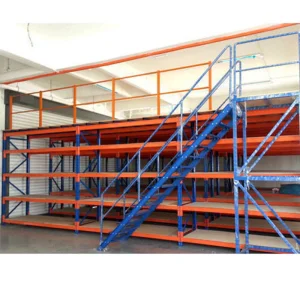
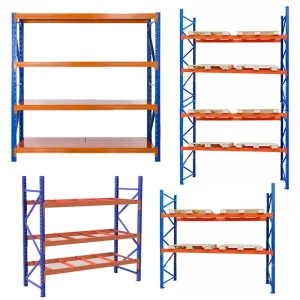
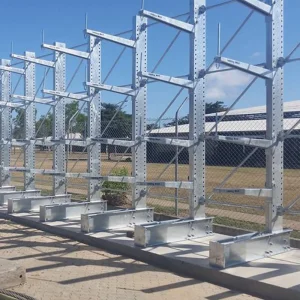
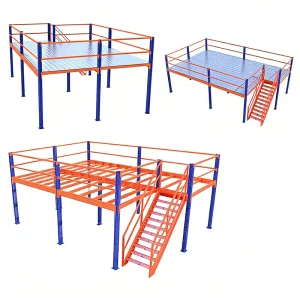
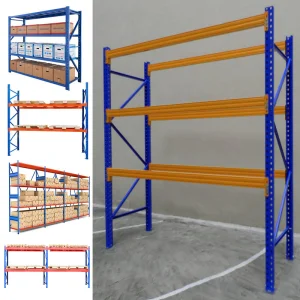
Industrial-Grade Racking, Cantilevers, and Heavy-Duty Floor Platforms
 JGY Shelf